
Tail Hedging
Protection Against Extreme Events
Tail hedging is a strategic approach to protecting portfolios against severe, unexpected market crises. We only hedge the extreme events. Deep drawdowns damage compounding the most, while shallow pullbacks (up to ~10%) aren't worth hedging. Tail hedges can pay out sharply in crises, giving us dry powder when markets are at their weakest. When that happens, we look to take profit and reinvest proceeds into equity at attractive lows.
Tail hedging works through far out-of-the-money put options that maximize convexity, protecting against the deepest losses where hedging is most needed. The strategy reacts best in sudden, severe equity declines like Feb/Mar 2020. We prioritize structures that maximize convexity and systematically attach premium harvesting strategies to mitigate theta decay. By holding a variety of tail hedge structures throughout the economic cycle and tactically adjusting protection when volatility expands, we ensure adequate protection should the worst transpire.
How we think about tail hedging
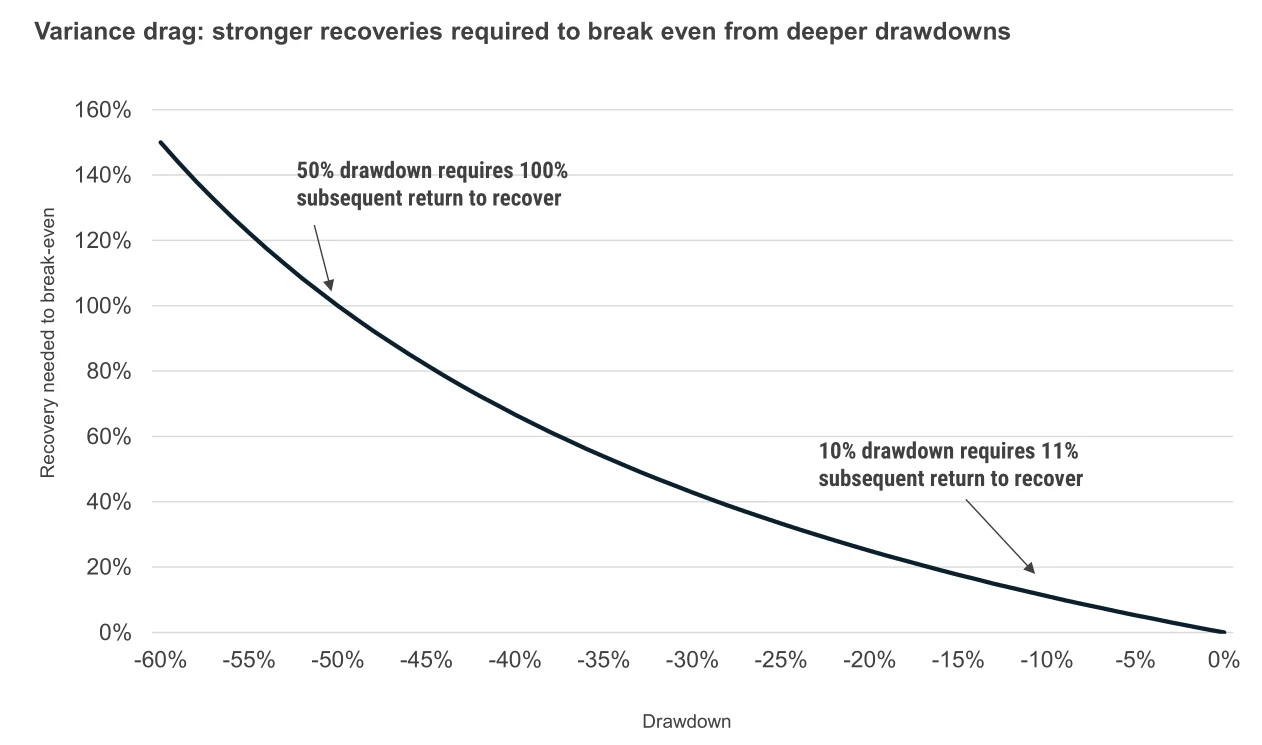
Deep drawdowns set portfolios back the most. Severe drawdowns (~20% or more) can take years to recover from, while shallow pullbacks are too expensive to hedge.
Tail hedging vs Trend-Following
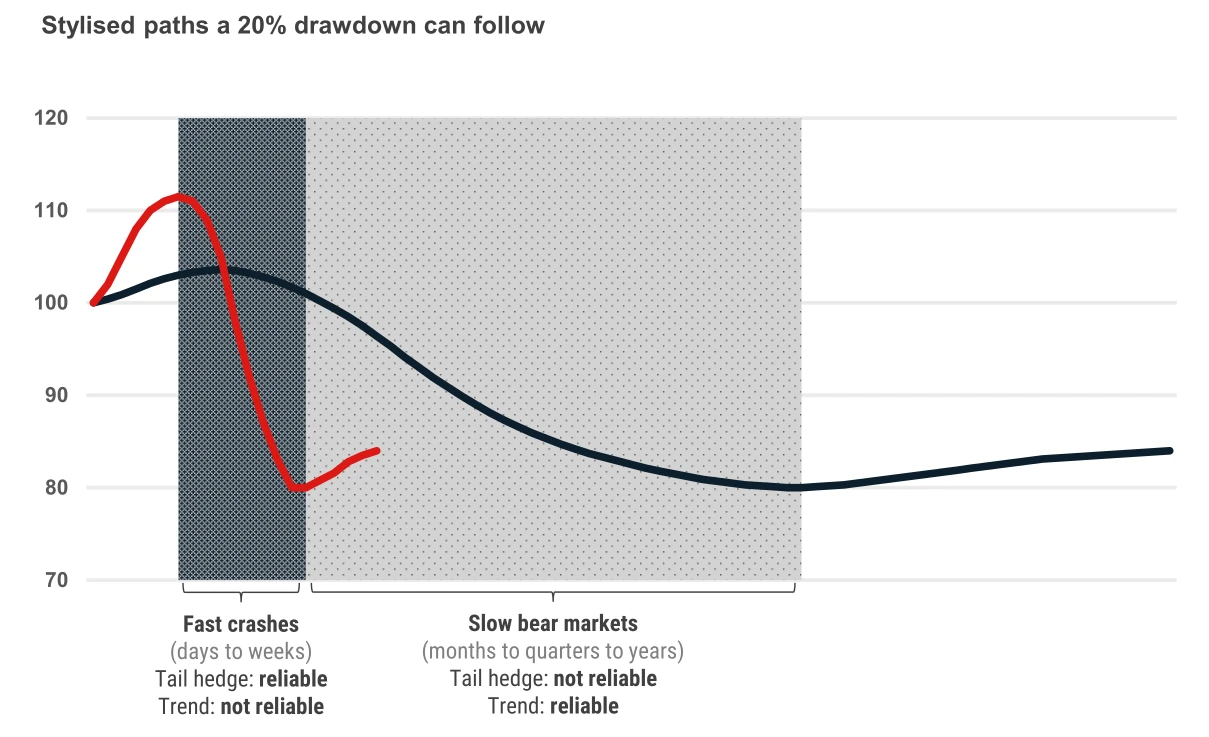
We need tail hedging because it helps when trend can't. Tail hedges react best in sudden crashes (fast), while trend-following performs best in slow bear markets.
Far out-of-the-money puts offer the biggest bang for the buck
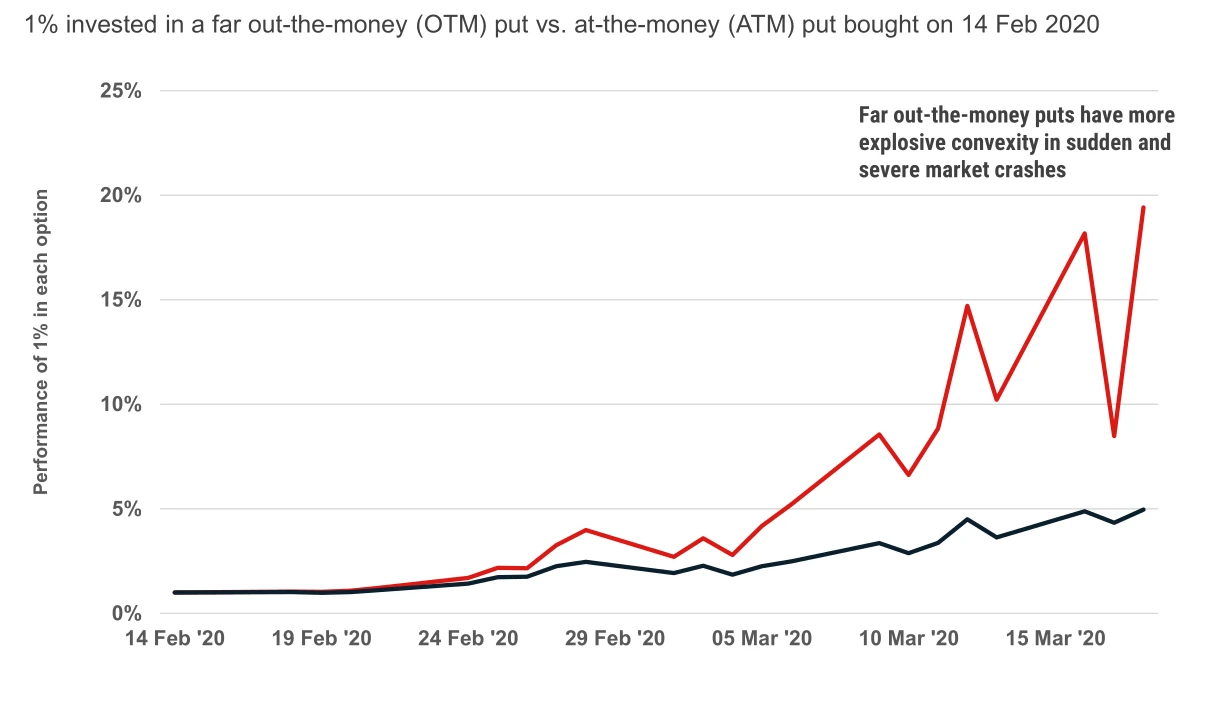
The key insight is that options don't need to end in-the-money to be effective. In crisis, option values increase exponentially as fear sets in.
What success looks like: backtest results
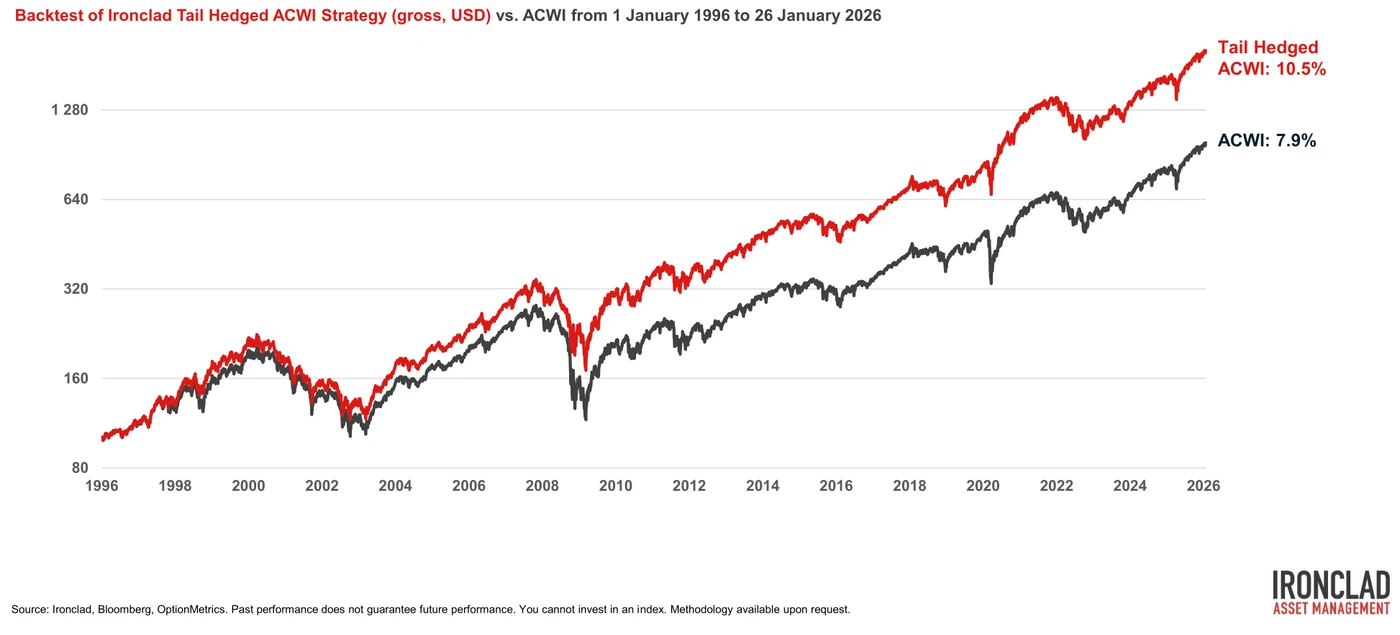
Tail hedge strategy generated outsized returns especially in 2008 and 2020, with monetisation occurring in the depths of crisis.
What success looks like: drawdowns
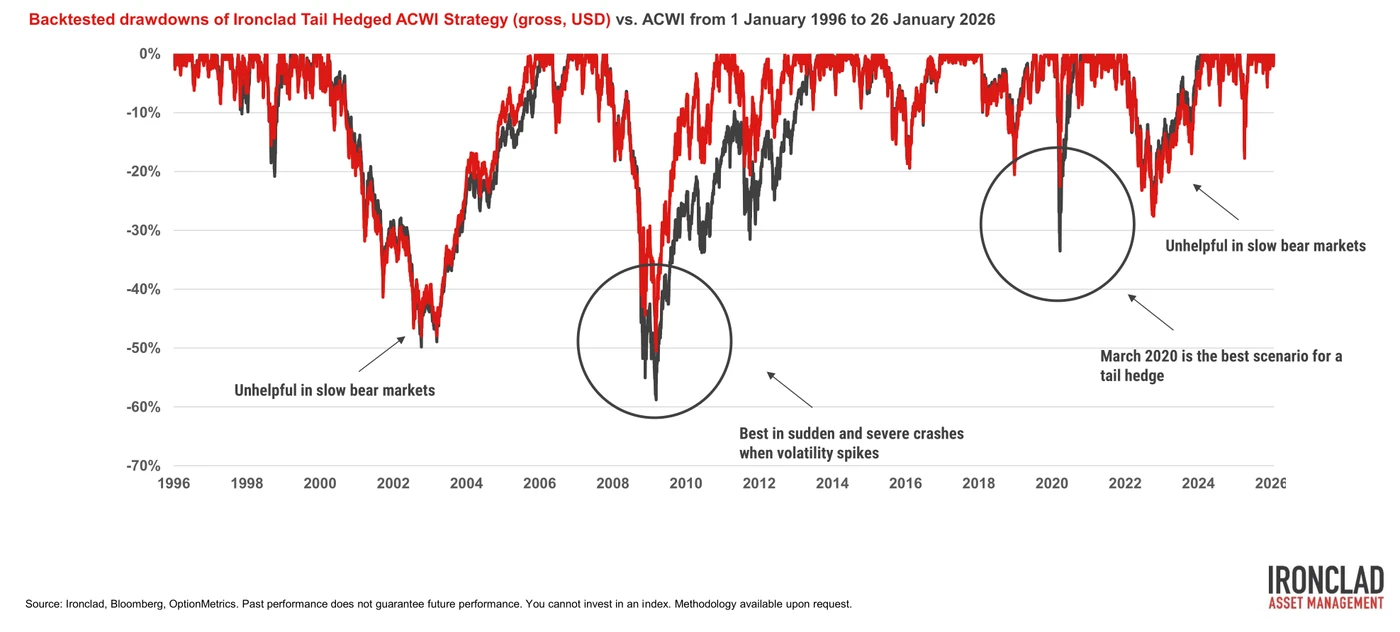
Strategy is of little help in slow bear markets, which is fine because that's when trend-following does the heavy lifting.
Key Features
- ✓ Protects against deep, sudden drawdowns (20%+ declines)
- ✓ Uses far out-of-the-money put options for maximum convexity
- ✓ Generates dry powder to reinvest during market crises
- ✓ Systematically monetizes protection when fear turns to panic
- ✓ Premium harvesting strategies mitigate bull market bleed
- ✓ Longer-dated options reduce impact of theta decay
- ✓ Tactical adjustments ensure adequate protection across cycles
- ✓ Works best with trend-following for complete crisis alpha coverage
Key Information
Focus
Extreme Events (~20% or more)
Hedging Approach
Far Out-of-the-Money Puts
Optimal Scenario
Sudden, Severe Drawdowns
Crisis Response
Days to Weeks
Key Benefit
Generate Liquidity at Market Lows